Fix Overexposed Car Photos with AI Technology: A Complete Guide for Dealers
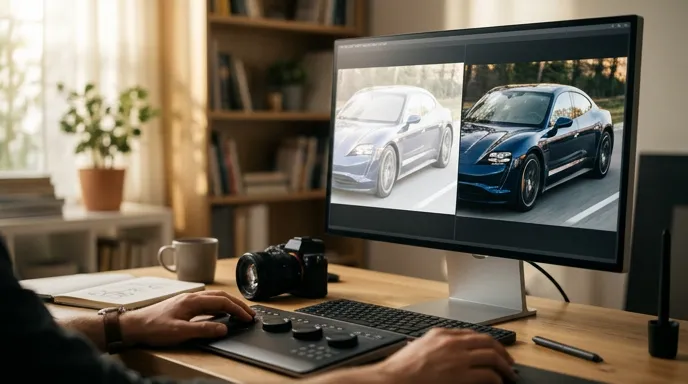
Overexposed vehicle photos cost dealers real money—listings with blown-out highlights receive significantly fewer clicks than properly exposed images. The good news: you can fix overexposed car photos with AI technology in seconds, recovering lost detail in windows, paint, and chrome without manual editing expertise. This guide explains exactly how AI-powered correction works and how dealers can implement it across their entire inventory.
What Is Overexposure and Why Does It Happen in Dealership Photography?
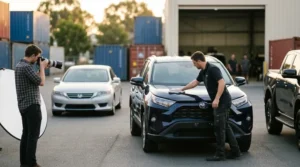
Overexposure occurs when too much light hits the camera sensor, washing out detail in bright areas of the image. In automotive photography, this is extremely common because vehicles are frequently photographed outdoors, where sunlight creates harsh, uneven lighting conditions.
The most common causes of overexposed car photos include:
- Shooting in direct midday sunlight without shade or diffusion
- Reflective surfaces—white paint, chrome trim, and windshields—amplifying incoming light
- Smartphone cameras auto-adjusting exposure for the background rather than the vehicle
- Backlighting situations where the sky or a bright wall dominates the scene
- Incorrect manual settings on entry-level DSLR cameras used by lot staff
For dealers managing 20 to 500+ vehicles, retaking every overexposed photo is simply not practical. That is precisely why AI-powered correction tools have become essential to modern inventory photography workflows.
How AI Technology Fixes Overexposed Car Photos
Modern AI exposure correction is not a simple brightness slider. The technology uses deep learning models trained on millions of automotive images to intelligently identify overexposed regions and reconstruct missing detail based on contextual visual data.
Here is how the process works step by step:
- Exposure mapping: The AI analyzes each pixel to identify blown-out zones—areas where highlight values have clipped to pure white and detail information is lost.
- Contextual reconstruction: Using surrounding pixel data and learned patterns from automotive images, the model estimates what the overexposed region should look like—recovering paint texture, glass transparency, or chrome reflections.
- Tone curve adjustment: The AI applies a non-destructive tone curve that pulls highlights down while preserving shadow detail and midtone contrast, producing a naturally balanced image.
- Surface-aware processing: Advanced models distinguish between glass, metal, rubber, and fabric surfaces, applying different correction logic to each material type for realistic results.
- Output optimization: The corrected image is rendered in the appropriate format and resolution for marketplace-optimized exports on platforms such as AutoTrader, Cars.com, and mobile.de.
The entire process typically completes in under five seconds per image, making it practical for batch processing entire vehicle inventories without manual intervention.
3 Practical Scenarios Where AI Exposure Correction Delivers Immediate Value
1. White and Silver Vehicles in Bright Sunlight
Light-colored vehicles are the most frequent victims of overexposure. AI correction recovers the subtle tonal variation across white or silver panels that makes a vehicle look three-dimensional rather than flat and washed out. This directly improves the perceived quality of the listing photo.
2. Windshields and Glass Surfaces
Blown-out windshields make buyers suspicious—they cannot see the interior, which raises concerns about the cabin condition. AI exposure tools specifically target glass surfaces, restoring transparency and allowing the interior to read clearly without reflection artifacts.
3. Outdoor Lot Photography with Mixed Lighting
When the sky is bright and the vehicle sits in partial shade, the camera cannot expose correctly for both simultaneously. AI technology resolves this HDR-like challenge by processing different exposure zones independently, producing a final image that looks professionally lit even when it was captured on a smartphone in a parking lot.
How to Fix Overexposed Car Photos with AI Technology Using Car Studio
Platforms like Car Studio are specifically built for automotive dealers who need to fix overexposed car photos with AI technology at scale. The workflow is designed to minimize the time between photo capture and live listing.
The platform integrates exposure correction directly into its broader vehicle image processing pipeline, which includes:
- AI background replacement: Replace cluttered parking lot backgrounds with clean, neutral studio-style settings that meet marketplace image requirements.
- License plate blur and removal: Automatically detect and blur or remove license plates for privacy compliance across GDPR and regional regulations.
- Batch processing: Upload and process an entire vehicle inventory simultaneously rather than editing images one by one.
- Marketplace-optimized exports: Export dealer-quality photos in the correct dimensions, file sizes, and formats required by AutoTrader, Cars.com, Facebook Marketplace, OLX, and mobile.de.
This integrated approach means dealers do not need to use multiple tools—exposure correction, background replacement, and compliance features are all handled within a single platform, reducing workflow complexity and per-image processing time significantly. For a deeper dive into this topic, click here is a recommended resource.
AI Exposure Correction vs. Manual Editing: A Direct Comparison
Many dealers still rely on manual editing in desktop software to address overexposed images. Understanding the practical differences helps justify the switch to automated AI processing.
- Speed: Manual correction of a single overexposed image takes an experienced editor three to eight minutes. AI correction completes the same task in three to five seconds.
- Consistency: Human editors apply slightly different corrections to each image depending on fatigue, subjectivity, and time pressure. AI applies a consistent standard across every photo in a batch.
- Scalability: A dealer adding 50 new vehicles per week cannot realistically employ a full-time editor for exposure correction alone. Batch processing via AI scales to any inventory size without additional labor cost.
- Realism: Well-trained AI models correct exposure while preserving the authentic appearance of the vehicle. Car Studio’s approach is grounded in transparency—the goal is accurate representation, not artificial enhancement that misrepresents the vehicle’s true condition.
Best Practices for Capturing Car Photos That Require Minimal AI Correction
While AI technology can fix overexposed car photos effectively, reducing the degree of correction needed always produces the best results. These practical tips help lot photographers capture better source images:
- Shoot during golden hour: The hour after sunrise and before sunset provides soft, directional light that minimizes blown-out highlights on reflective surfaces.
- Use cloudy days strategically: Overcast conditions act as a natural diffuser, creating even light across the entire vehicle without harsh hot spots.
- Enable HDR mode on smartphones: Most modern smartphones include an HDR setting that captures multiple exposures and blends them automatically, significantly reducing overexposure in bright conditions.
- Position the vehicle away from direct backlighting: Avoid shooting with the sun directly behind the vehicle. A 45-degree angle to the light source produces more balanced results.
- Use exposure compensation: When shooting manually, dial exposure down by one to two stops in bright conditions to protect highlight detail, then let AI correction bring up shadow areas in post-processing.
Frequently Asked Questions
Can AI fully recover detail from completely blown-out photos?
AI can recover significant detail from moderately overexposed images by reconstructing texture from surrounding pixel data. Severely clipped regions where all highlight information is lost present greater limitations, though modern models handle most real-world dealership overexposure scenarios effectively.
Does AI exposure correction alter the actual condition of the vehicle?
No. AI exposure correction restores accurate visual representation of the vehicle—it recovers detail that was genuinely present but lost due to camera limitations. It does not add, remove, or alter physical features of the vehicle, maintaining full transparency for buyers.
How to Fix Over Exposed Photos in Lightroom Classic in 2024
For a visual demonstration of these techniques in action, Rogala Photography walks through the step-by-step process of recovering overexposed images using Lightroom Classic. This guide shows you exactly which tools and settings to adjust, making it easy to apply these methods to your own car photography.
How long does batch processing take for a full inventory?
Processing time depends on inventory size and platform capacity, but AI batch processing typically handles 50 to 100 vehicle images in under ten minutes. This is dramatically faster than manual editing workflows, which could require several hours for the same volume.
Is AI car photo correction compliant with marketplace image policies?
Yes, when used correctly. Platforms like Car Studio export images in formats and resolutions compliant with major marketplaces. Exposure correction falls within acceptable image improvement—it accurately represents the vehicle rather than misrepresenting its condition.
Can I use AI correction alongside background replacement?
Absolutely. In fact, combining exposure correction with AI background replacement delivers the most professional results. Car Studio applies both processes within a single workflow, producing showroom-ready images from standard parking lot photos.
Key Takeaways
- Overexposed vehicle photos directly reduce listing click-through rates—AI correction recovers lost detail and restores professional image quality in seconds.
- AI technology fixes overexposed car photos by mapping blown-out regions, reconstructing detail using contextual data, and applying surface-aware tone correction automatically.
- Batch processing allows dealers to correct exposure across an entire inventory simultaneously, eliminating the need for manual editing at scale.
- Combining AI exposure correction with background replacement and license plate blur delivers a complete, marketplace-ready image from a single workflow.
- Better capture habits—shooting during golden hour, using HDR mode, and managing light angles—reduce correction needs and improve final image quality.
- Car Studio integrates exposure correction, AI background replacement, and marketplace-optimized exports into one platform designed specifically for automotive dealers.
Conclusion: Turn Every Parking Lot Photo into a Dealer-Quality Listing
Overexposure is one of the most common and correctable problems in automotive inventory photography. With the right tools, dealers no longer need to choose between retaking photos or publishing substandard listings. The ability to fix overexposed car photos with AI technology—quickly, consistently, and at scale—has become a fundamental part of competitive dealership operations in 2026.
Whether you manage 20 vehicles or 500, the time savings and listing quality improvements from AI-powered image processing translate directly into faster time-to-listing and stronger buyer engagement. We recommend exploring how Car Studio’s integrated platform can transform your inventory photography workflow from capture to published listing.
Ready to see the difference AI exposure correction makes on your vehicle photos? Visit CAR STUDIO — AI Car Photo Editing for Dealers and start producing showroom-ready images from your existing parking lot photos today.
Infographic