How to Reduce Car Photo Editing Costs Per Vehicle: A Direct Answer
The most effective way to reduce car photo editing costs per vehicle is to replace manual retouching workflows with AI-powered batch processing. Dealers who automate background replacement, license plate blur, and marketplace-optimized exports consistently process inventory at a fraction of the cost of traditional editing—often cutting per-image expenses by more than half while maintaining dealer-quality photo standards.
For dealerships managing 20 to 500+ vehicles, those savings compound rapidly. A single vehicle listing may require 8 to 15 photos. Multiply that by a rotating inventory, and manual editing costs become a serious operational burden. This guide breaks down exactly how to reduce car photo editing costs per vehicle in 2026 using AI automation and smarter workflows.
Why Per-Vehicle Photo Editing Costs Are Rising—and How AI Reverses the Trend
The automotive retail market has grown increasingly visual. According to Cox Automotive’s 2025 Car Buyer Journey study, listings with high-quality imagery receive significantly more clicks and inquiries than those with low-effort photos. Buyers now expect showroom-ready presentation even for used vehicles listed on platforms like AutoTrader, Cars.com, mobile.de, and OLX.
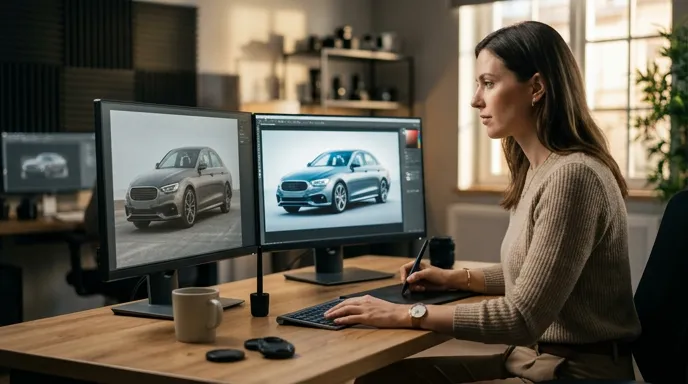
That expectation creates pressure. Dealerships either invest in professional editing services—which typically charge between $2 and $8 per image—or they absorb the cost of in-house editing, which adds hours to every listing cycle. Neither approach scales well.
AI background replacement and automated processing tools change the equation entirely. Instead of paying per image or per hour, dealers process entire inventory batches at a predictable, low cost per vehicle. The result: faster time-to-listing and dramatically lower per-unit photo expenses.
5 Proven Strategies to Reduce Car Photo Editing Costs Per Vehicle
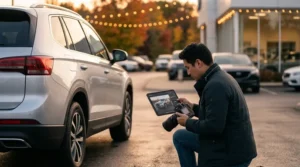
- Switch from manual editing to AI batch processing. Manual editing requires a trained editor to process each image individually—adjusting backgrounds, correcting lighting, and exporting for multiple platforms. AI batch processing handles dozens or hundreds of vehicles simultaneously, reducing the time and cost per unit to a fraction of manual methods. Platforms like Car Studio are purpose-built for this workflow, enabling dealers to transform parking lot photos into showroom-ready images at scale.
- Use AI background replacement instead of renting a studio. Studio photography sessions eliminate environmental distractions, but they require scheduling, transportation of vehicles, and significant fees. AI background replacement achieves the same clean, professional look directly from lot photos—no studio required. The vehicle stays on the lot, and the editing happens automatically in the cloud.
- Automate license plate blur and removal. Every vehicle listing must comply with privacy regulations and marketplace image policies that require license plates to be obscured or removed. Doing this manually for each image is time-consuming. Automated license plate blur software identifies and processes plates across all images in a batch, eliminating a repetitive, low-value task and reducing per-vehicle editing time significantly.
- Export directly to marketplace-optimized formats. Each major automotive marketplace—AutoTrader, Cars.com, Facebook Marketplace, mobile.de—has specific image dimension, resolution, and file size requirements. Manually resizing and exporting for each platform multiplies editing time. Marketplace-optimized exports, generated automatically after AI processing, eliminate this step entirely and ensure every image meets platform specifications on the first upload.
- Standardize your photo capture process. AI editing tools perform best when input images are consistent. Establishing a standardized photography checklist—consistent angles, lighting conditions, and vehicle positioning—reduces the amount of correction needed during AI processing. Fewer corrections mean faster processing times and lower costs per vehicle.
Understanding the Real Cost of Per-Vehicle Photo Editing
To reduce car photo editing costs per vehicle effectively, dealers first need to understand what they are actually spending. Most dealerships underestimate their true editing costs because expenses are distributed across multiple line items.
Consider a mid-size independent dealership with 80 vehicles in active inventory and a 30-day turnover cycle. If each vehicle requires 10 photos and editing costs $3.50 per image through an outsourced service, the monthly photo editing spend reaches $2,800—or $33,600 annually. For a dealership using in-house editors at an average salary cost, the figure is often higher when accounting for benefits, software licenses, and management time.
AI-powered automotive dealership photo editing platforms like Car Studio compress this cost dramatically. The per-vehicle processing rate is predictable and significantly lower than outsourced or in-house alternatives, making inventory photography a manageable, scalable line item rather than a growing overhead burden.
AI vs. Manual Editing: A Side-by-Side Comparison
| Factor | Manual Editing | AI Batch Processing |
|---|---|---|
| Cost per image | $2–$8 (outsourced) | Significantly lower, fixed rate |
| Processing time per vehicle | 30–90 minutes | Minutes |
| License plate compliance | Manual, error-prone | Automated, consistent |
| Marketplace export formats | Manual resizing required | Auto-generated per platform |
| Scalability | Limited by headcount | Unlimited batch capacity |
How Vehicle Listing Optimization Affects Click-Through Rates
Reducing per-vehicle photo editing costs is not only a financial decision—it directly affects listing performance. Vehicle listing optimization through consistent, professional imagery increases click-through rates and reduces time-on-lot. Industry data consistently shows that listings with clean, well-lit, background-neutral images outperform those with cluttered or inconsistent photos.
When dealers reduce car photo editing costs per vehicle by automating the process, they simultaneously increase output volume and image quality. More vehicles get listed faster, with dealer-quality photos that meet marketplace standards. The result is a compounding advantage: lower costs, higher throughput, and better listing performance.
Showroom-ready imagery—once the exclusive domain of franchise dealers with photography budgets—becomes accessible to independent used car dealers, auction platforms, and fleet managers using AI-powered tools.
Implementing an AI-Powered Inventory Photography Workflow
Transitioning from manual editing to AI automation requires a structured approach. We recommend the following implementation steps for dealerships of any size:
- Audit your current editing costs. Calculate your monthly spend on outsourced editing, in-house editor time, and software licenses. Establish a baseline cost per vehicle.
- Standardize your photo capture process. Define required angles, minimum lighting conditions, and acceptable shooting locations. Consistency at the capture stage maximizes AI processing accuracy.
- Select an AI car photo editing platform purpose-built for automotive. General-purpose editing tools lack the vehicle-specific intelligence needed for reliable background replacement and license plate detection. Purpose-built platforms deliver significantly higher accuracy and faster processing.
- Run a pilot batch. Process one week of new inventory through the AI platform before committing fully. Compare output quality, processing time, and effective cost per vehicle against your baseline.
- Scale and standardize. Once the pilot confirms cost and quality targets, roll out the workflow across all inventory. Train lot staff on the standardized photo capture checklist to maintain consistent input quality.
Frequently Asked Questions
How much can AI reduce car photo editing costs per vehicle?
AI batch processing typically reduces per-vehicle photo editing costs by 50% to 80% compared to outsourced manual editing services. Exact savings depend on current vendor rates, inventory volume, and the number of images processed per vehicle.
Does AI background replacement work on all vehicle types?
Modern AI background replacement tools are trained on extensive automotive datasets and work reliably across cars, SUVs, trucks, vans, and motorcycles. Purpose-built platforms like Car Studio are specifically optimized for automotive inventory photography.
Is automated license plate blur compliant with GDPR and marketplace policies?
Yes. Automated license plate blur software detects and obscures plates consistently across all images, supporting GDPR compliance and meeting the image policies of major automotive marketplaces. Manual blurring introduces human error risk that automated systems eliminate.
Streamlining Your Car Photo Editing Workflow
If you’re looking to cut down on editing time and costs, understanding efficient editing techniques is essential. Digital Photo Mentor walks through a practical approach to editing car photos using Lightroom, demonstrating the tools and workflows that can help you process vehicle images more quickly without sacrificing quality.
How long does AI batch processing take for a full inventory?
Processing times vary by platform and volume, but most AI automotive photo editing platforms complete a full batch of 10 to 15 images per vehicle in minutes rather than hours. Large inventories that previously took days to edit can be completed within a single working session.
Can small dealerships benefit from AI photo editing tools?
Absolutely. Independent dealers with as few as 20 vehicles in inventory benefit from AI automation. The per-vehicle cost reduction is consistent regardless of scale, and faster time-to-listing improves turnover rates for smaller operations as much as for large franchise groups.
Key Takeaways
- Replacing manual editing with AI batch processing is the most direct way to reduce car photo editing costs per vehicle at scale.
- AI background replacement eliminates studio rental costs while delivering showroom-ready image quality from standard parking lot photos.
- Automated license plate blur ensures consistent privacy compliance across all inventory images without adding manual editing time.
- Marketplace-optimized exports remove the time-consuming step of resizing and reformatting images for each automotive listing platform.
- Standardizing photo capture on the lot maximizes AI processing accuracy and further reduces the cost and time required per vehicle.
- Dealerships that automate inventory photography report faster time-to-listing, lower per-unit costs, and improved listing click-through rates.
Conclusion: Start Reducing Your Per-Vehicle Photo Editing Costs Today
Every vehicle in your inventory represents both an asset and an opportunity. The faster you list it with dealer-quality photos, the faster it sells. Manual editing workflows—whether outsourced or in-house—impose avoidable costs and delays that compound across hundreds of vehicles per year.
AI-powered platforms purpose-built for automotive dealerships make it straightforward to reduce car photo editing costs per vehicle while improving image consistency, compliance, and listing performance. The technology is mature, the cost savings are measurable, and the implementation path is clear.
We invite you to explore what AI automation can do for your inventory photography workflow. Visit CAR STUDIO — AI Car Photo Editing for Dealers to see how dealers are transforming parking lot photos into showroom-ready listings in minutes—at a fraction of traditional editing costs.
Infographic