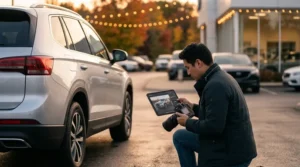
What Is Dealership Inventory Management with Photo Optimization?
Dealership inventory management with photo optimization is the integrated process of organizing, presenting, and publishing vehicle listings with professionally processed images across multiple sales channels simultaneously. When executed correctly, it reduces time-to-listing, increases click-through rates, and directly drives more qualified leads—without requiring a photography studio or a dedicated retouching team.
In 2026, the average car buyer reviews more than 15 vehicle listings before making first contact with a dealer. That means your inventory photos are your most powerful sales tool—and most dealerships are still leaving significant revenue on the table by treating them as an afterthought.
Why Photo Quality Directly Impacts Inventory Performance
Visual presentation is no longer a differentiator—it is a baseline expectation. According to research by Cox Automotive (2025), listings with high-quality, consistent vehicle photos receive up to 3.5 times more views than listings with standard lot photography. Across platforms like AutoTrader, Cars.com, Facebook Marketplace, and mobile.de, image quality is one of the primary algorithmic ranking signals.
Poor inventory photography creates a compounding problem: lower click-through rates, longer days-on-lot, and reduced perceived vehicle value. Dealership inventory management with photo optimization solves all three simultaneously by ensuring every vehicle in your stock is presented consistently and professionally from the moment it enters your lot.
The Cost of Inconsistent Inventory Photography
- Inconsistent backgrounds and lighting create a disjointed brand experience across listings
- Cluttered parking lot backgrounds distract buyers and reduce perceived vehicle value
- Unblurred license plates create GDPR and privacy compliance risks for dealers operating in the EU and UK
- Manual photo editing per vehicle can cost 20–45 minutes of staff time, multiplied across hundreds of units
- Delayed listings mean vehicles sit longer before generating inquiries—directly increasing holding costs
5 Core Components of an Effective Inventory Photo Optimization System
Building a scalable dealership inventory management with photo optimization workflow requires five interconnected components. Each one contributes to faster listings, lower operational costs, and stronger marketplace performance.
- Standardized photo capture protocols: Define the exact angles, distances, and lighting conditions your lot photographers must follow for every vehicle. A consistent capture standard is the foundation that makes AI photo processing reliable and repeatable.
- AI background replacement: Replace inconsistent parking lot backgrounds with clean, neutral, or marketplace-compliant studio-style backdrops automatically. An AI car photo background replacement tool processes each image in seconds—not minutes—and eliminates the visual noise that suppresses buyer engagement.
- Automated license plate blur and removal: License plate blur removal software automatically detects and obscures plate numbers across every image in a batch, ensuring compliance with privacy regulations including GDPR without requiring manual review of each photo.
- Marketplace-optimized image exports: Different platforms—AutoTrader, Cars.com, OLX, mobile.de, Facebook Marketplace—have distinct image dimension, resolution, and format requirements. Car marketplace optimized image exports automatically format each image to meet every platform’s specifications, eliminating manual resizing and reformatting.
- Batch processing for high-volume inventories: For dealerships managing 50, 200, or 500+ active listings, processing images one at a time is operationally unsustainable. Batch processing enables an entire day’s photography intake to be processed in one automated workflow, compressing what previously took days into hours.
How AI Is Transforming Dealership Inventory Management with Photo Optimization in 2026
The automotive retail sector has undergone a significant shift in how inventory photography is handled. Where dealerships once relied on manual editing workflows, outsourced retouching agencies, or inconsistent in-house processes, AI-powered platforms now deliver showroom-ready results at scale—directly from parking lot photos.
The automotive dealership photo editing platform category has matured considerably. Modern solutions like Car Studio integrate AI background replacement, license plate blur, and marketplace export functionality into a single unified workflow. This means a lot photographer can capture images in the morning and have fully optimized, multi-platform-ready listings published before noon.
From Parking Lot to Showroom: The AI Workflow in Practice
Consider a mid-sized independent dealer managing 120 active used vehicle listings. Previously, their process involved a part-time photographer, manual uploads to an editing tool, background removal by a freelancer, and individual uploads to each marketplace—a process taking two to three days per inventory refresh.
With AI-powered showroom-ready vehicle image processing, the same workflow now operates as follows:
- Lot photographer captures standard angles for each vehicle (approximately 8–12 shots per unit)
- Images are uploaded in bulk to the AI platform
- AI background replacement applies a clean, neutral backdrop to every exterior shot automatically
- License plate blur software scans and obscures all visible plates without manual intervention
- Marketplace-optimized exports are generated for each target platform simultaneously
- Finalized images are ready for listing publication—within minutes of upload
Industry data indicates that dealerships implementing structured AI photo workflows reduce their average time-to-listing by 60–70%, with measurable improvements in listing engagement within the first 30 days.
Vehicle Listing Optimization: What Buyers Actually See First
Dealership inventory management with photo optimization is not solely an operational efficiency play—it is a direct conversion lever. Research from the National Automobile Dealers Association (NADA, 2025) confirms that the lead image of a vehicle listing determines whether a buyer clicks through or scrolls past in under two seconds.
Dealer-quality photos—images with consistent backgrounds, proper exposure, and no distracting environmental elements—signal professionalism and build immediate buyer trust. For independent dealers competing against franchised groups on shared marketplaces, this visual parity is a significant competitive equalizer.
Key Visual Standards for Marketplace-Ready Inventory Photos
- Clean, neutral backgrounds that do not compete with the vehicle’s color or shape
- Consistent framing across all units in inventory (same angle ratios, same vehicle positioning)
- No visible license plates—compliance-ready for all major markets
- Proper resolution meeting each platform’s minimum image quality requirements
- Interior shots with natural lighting and no personal items visible
- Accurate color representation—no artificial saturation or unrealistic tone adjustments
The final point is critical: inventory photography must represent the vehicle accurately and honestly. Transparent, realistic imagery builds buyer confidence and reduces post-visit disappointment—a core principle of effective vehicle listing optimization.
Scaling Inventory Photography Across Multiple Locations
For dealer groups operating multiple lots, brand consistency across locations presents a persistent challenge. Each location may have different lighting conditions, staff capabilities, and existing photo workflows. Dealership inventory management with photo optimization at scale requires a centralized visual standard enforced through technology rather than manual oversight.
AI-powered batch processing enables multi-location groups to apply identical visual standards to every vehicle photograph—regardless of which lot it was captured on. A single set of output parameters (background style, export format, resolution) applied at the platform level ensures that every listing across every location looks as though it originated from the same professional studio environment.
Frequently Asked Questions
What does dealership inventory management with photo optimization involve?
It is the process of systematically capturing, editing, and publishing vehicle photos as part of the inventory listing workflow. It integrates AI background replacement, license plate blur, and marketplace-optimized exports to reduce editing time and improve listing performance across all sales channels.
How much time can AI photo processing save per vehicle?
AI-powered platforms typically reduce per-vehicle photo processing time from 20–45 minutes to under 2 minutes per unit. For a dealership refreshing 50 vehicles weekly, this represents a saving of 15–35 staff hours per week.
Is license plate blur required for online vehicle listings?
In many jurisdictions—particularly across the EU and UK under GDPR—obscuring license plates in publicly published vehicle images is a compliance requirement. Automated license plate blur software removes this risk without adding manual processing steps to your workflow.
Automating Your Dealership Photo Workflow
Managing thousands of vehicle photos across your inventory can quickly become a bottleneck for your dealership operations. Virtual Tour Profit demonstrates how automation tools can streamline your entire photo process, from capture to final listing, so your team can focus on selling rather than spending hours on image management.
Can AI photo tools handle high-volume inventory batches?
Yes. Purpose-built automotive dealership photo editing platforms support batch uploads of hundreds of images simultaneously. Batch processing is specifically designed for high-volume operations where manual per-image editing is operationally unsustainable.
Will AI-optimized photos work across all major car marketplaces?
Marketplace-optimized image exports are formatted to meet the specific dimension, resolution, and file format requirements of platforms including AutoTrader, Cars.com, Facebook Marketplace, mobile.de, and OLX—eliminating the need for manual reformatting per platform.
Does photo optimization accurately represent vehicle condition?
AI background replacement and lighting normalization present vehicles clearly and professionally without altering the vehicle itself. Transparent, accurate representation of each unit’s actual condition remains the standard—building buyer trust and reducing post-viewing disappointment.
Key Takeaways
- Dealership inventory management with photo optimization integrates AI editing tools directly into the vehicle listing workflow, reducing time-to-listing by up to 70%.
- AI background replacement transforms inconsistent parking lot photos into dealer-quality, showroom-ready images at scale without manual editing.
- Automated license plate blur ensures GDPR and privacy compliance across all published vehicle listings without adding manual processing steps.
- Marketplace-optimized exports automatically format images to meet the technical requirements of every major automotive sales platform simultaneously.
- Batch processing makes high-volume inventory photo workflows operationally sustainable for dealerships managing 50 to 500+ active listings.
- Consistent, professional inventory photography directly improves click-through rates, reduces days-on-lot, and strengthens buyer trust across all channels.
Start Optimizing Your Dealership Inventory Photos Today
Effective dealership inventory management with photo optimization is the single highest-leverage improvement most dealerships can make to their online sales performance in 2026. The technology is accessible, the workflow integration is straightforward, and the results—faster listings, stronger engagement, and lower operational costs—are measurable from the first batch.
We recommend starting with a structured photo capture protocol for your lot, combined with an AI-powered editing platform that handles background replacement, compliance processing, and marketplace exports in one unified workflow. The competitive advantage this creates compounds with every vehicle you list.
To see how AI-powered inventory photo optimization works in practice, visit CAR STUDIO — AI Car Photo Editing for Dealers and transform your parking lot photography into showroom-ready listings today.
Infographic